
Quick answer: The best contemporary short story collections are the ones matched to what you actually want from your reading, not just the ones topping every list. If you want humane, character-driven realism about ordinary people and their inner lives, look for single-author collections built around belonging, acceptance, and quiet turning points rather than high-concept anthologies. Sort your choice by the feeling you are after (quiet realism, strangeness, or humor), and a short collection can give you a complete emotional experience in a single sitting.
What makes a contemporary short story collection worth your time
A short story collection is worth your time when every story earns its place and the book as a whole leaves you with something no single story in it could deliver alone. That is a much higher bar than one or two good stories, and it is the bar most roundup lists never state out loud before handing you 100 titles.
This guide applies 3 criteria, in the same order every time, and every recommendation below is sorted against them.
Cohesion. The stories do not need to share characters, a narrator, or a setting, but they do need to share a preoccupation. A collection built around one honest question, what home is, what people owe each other, what happens to a person after the worst day of their life, accumulates force as you read. A collection assembled from whatever the writer had in a drawer does not, no matter how good the individual pieces are.
Emotional payoff. A story can be technically flawless and still leave nothing behind. The collections that hold up are the ones where at least half the stories change something in you by the last page, and where you can still describe a character to a friend 6 months later without going back to check.
Fit to your taste. This is the criterion the big lists skip entirely, and it is the one that decides whether you finish the book. A collection that is brilliant at unsettling you is a bad recommendation for a reader who came for tenderness. Neither book is at fault. The match was.
There is a structural reason short fiction can hit as hard as a novel despite the length. A story hands you a person at the exact moment their life bends, with the years before and after left implied rather than narrated. You are given the pressure without the scaffolding, so 20 pages of a good story can carry the weight of 400 pages of a mediocre one. That compression is also why the form has long attracted writers whose working lives are spent listening closely to how ordinary people describe their own turning points, physicians and clinicians among them. Close listening is the whole job in both cases.
Are short story collections worth reading compared to a novel
Yes, and the honest reason is that a collection does something a novel structurally cannot. It gives you a complete emotional arc in 20 to 40 minutes and then asks you to begin again with strangers. That restart is the cost, and it is also the point.
The concrete case for reading collections comes down to 5 things.
- A complete arc in one sitting. You get a beginning, a turn, and an ending inside a single reading session, so the book rewards you on the first night instead of on page 200.
- A low-risk way to meet a new author. One story tells you more about a writer’s sentences, humor, and moral attention than 3 chapters of a novel, and costs you 25 minutes instead of a week.
- More intensity per page. Because a story cannot afford exposition, everything on the page has to do 2 jobs at once. Good collections are denser than good novels by necessity.
- A shape that survives a busy life. An interrupted novel loses its thread. An interrupted collection just waits at the next story, which is why collections travel well and work for readers who read in 20-minute pieces.
- Range inside one cover. A strong collection lets a writer be funny on page 30 and devastating on page 90, a swing most novels cannot make without breaking.
The honest trade-off is real. You do not get the slow accumulation that only length produces, the sense of having lived alongside one set of people for months. If that accumulation is what you want this week, read the novel and come back to the collection later. Preferring one is a mood, not a verdict on the form.
How to choose a short story collection you will actually finish
Decide what you want from the book before you look at any list, then match the list to the answer. Most abandoned collections are not bad books. They are mismatches, picked off a roundup that never asked what the reader was in the mood for.
The method below takes about 5 minutes and works on any list, including this one.
- Step 1. Name the feeling you want. Say it in 1 word before you browse. Quiet, strange, funny, angry, tender, unsettling. The word does most of the sorting for you, because almost every collection leans hard in exactly 1 of those directions.
- Step 2. Choose single-author or anthology. This decides how the book will feel across 300 pages more than any individual story does. The trade-off is set out in the section below.
- Step 3. Read the opening story before you commit. Sample the first story in the shop, in the library, or in the preview. Do not read the back cover instead. The back cover is written to sell the book, the first story is written to be the book.
- Step 4. Check the story count against the page count. 18 stories in 260 pages means tight, fast, self-contained pieces. 8 stories in 300 pages means long, slow, novella-shaped ones. Neither is better, but they are completely different reading experiences, and the difference is visible before you buy.
Step 3 carries far more weight than most readers give it. Writers and editors almost never open a collection at random. The opening story is chosen to represent the book, so it is the most reliable single tell you have. If the first story bores you, the collection will not rescue itself on page 140. If the first story makes you want to tell somebody about it, you have almost certainly found a book you will finish.
Single-author collection or multi-author anthology
Choose a single-author collection when you want one voice and a cumulative effect, where the stories quietly argue with each other and the whole becomes larger than the parts. Choose a multi-author anthology when you want range, discovery, and a shortlist of new writers to follow.
The practical difference shows up in how you read them. A single-author collection is best read in order, slowly, a story or 2 at a time, because the repetitions are deliberate. An anthology is best read by skipping around, because the pieces were never built to sit together and nothing is lost by reading the last one first.
If your goal is finding your next favorite writer, start with an anthology. If your goal is a satisfying book, start with a single author. Most disappointment with collections comes from reading an anthology cover to cover and concluding the form is uneven, when unevenness was the design.
The collections everyone is already recommending
These are the contemporary titles that appear on almost every list of the best contemporary short story collections, and they earn the attention. What the big roundups leave out is who each one is actually for, so a plain fit note is attached to each below instead of blurb copy.
Tenth of December by George Saunders: Published in 2013. Saunders writes wildly inventive, morally serious stories that are frequently funny and then suddenly not. Good for readers who want formal daring and a big heart in the same book. Skip it if you want realism with no strangeness in it.
Interpreter of Maladies by Jhumpa Lahiri: Published in 1999 and still one of the best literary short story collections to hand a new reader of the form. Quiet, precise stories about Indian and Indian American families, marriage, migration, and the distances inside a household. Good for readers who want restraint, clean prose, and ordinary domestic life taken seriously.
Dear Life by Alice Munro: Published in 2012 and Munro’s final collection. Ordinary lives in small Canadian towns, told across decades, where a single decision reroutes everything that follows. Good for readers who want the deepest version of quiet realism. Start here if you have never read her.
Homesick for Another World by Ottessa Moshfegh: Published in 2017. Unsparing, bleakly funny stories about people behaving badly and knowing it. Good for readers who want discomfort and dark comedy. A poor match if you want warmth, and it is honest to say so rather than recommend it to everyone.
Naming these 4 is the easy part of any guide. The harder and more useful part is what follows, because the reader who wants humane realism about ordinary interior life is the reader the big lists serve least well.
The quieter character-driven collections worth seeking out
The quiet, realist, character-driven collections about ordinary people and their inner lives are the ones the major roundups consistently under-cover, and they are the right answer for a large share of readers. If you finished a collection wishing it had been kinder and slower, this is the shelf you were looking for.
The reason for the gap is structural rather than malicious. Decade retrospectives and editorial best-of lists reward the formally adventurous, the speculative, and the loud, because those books are easier to write about. Restraint does not excerpt well. So the reader who wants interiority, patience, and an ordinary turning point rendered exactly is left to guess.
Olive Kitteridge by Elizabeth Strout: Published in 2008. Thirteen linked stories orbiting one difficult, unforgettable woman in a small Maine town. Good for readers who want a collection that reads with the accumulation of a novel while keeping the compression of stories.
Last Stories by William Trevor: Published by Viking in 2018, after Trevor’s death, and gathering 10 stories he intended as his final book. Tutors, piano teachers, and people carrying old secrets, written with almost no visible technique. Good for readers who want the quietest possible prose doing the heaviest possible lifting.
Wednesday’s Child by Yiyun Li: Published by Farrar, Straus and Giroux in 2023. Eleven stories written across 14 years, about grief, exile, and the way people keep functioning around a loss. Good for readers who want unflinching emotional honesty without any sentimentality at all.
After the Funeral and Other Stories by Tessa Hadley: Published in 2023. Twelve stories in which a small domestic event, a visit, a death, a discovery in a drawer, quietly reorganizes a family. Good for readers who want the English realist tradition carried forward with real warmth.
If Munro is the writer who brought you here, that is worth following properly, and the read-alikes if you love Alice Munro guide takes that thread further than a single fit note can.
There is a second thread running through this shelf that deserves saying plainly. Quiet realism is also where fiction tends to handle mental illness most credibly, because the form has the patience to stay with a person rather than use their diagnosis as a plot device. Stories written by people who have actually sat with the experience read differently, with fewer symptoms on display and more of the ordinary life going on around them. If that is the specific thing you are after, the guide to short stories that understand mental illness is the better starting point.
What quiet, character-driven fiction actually feels like
Quiet, character-driven fiction feels like being handed a person’s inner weather rather than a plot. The events are usually small, a phone call, a drive, a visit that goes slightly wrong, and the significance sits underneath them in what the character notices and refuses to say.
Three signals tell you that you are in it. The narration stays close to 1 consciousness and reports thought as carefully as it reports action. The turning point arrives without announcement, often in a sentence you have to reread. And the ending declines to resolve, because the writer trusts you to sit with the consequence rather than be told what it meant.
If that description sounds like relief rather than hard work, this is your territory, and the fuller guide to quiet, character-driven fiction for thoughtful readers goes deeper into how to spot it and what to read next. If it sounds airless, you will be much happier with the inventive and speculative end of the shelf, and there is no wrong answer here.
The new and recent collections to add to your list this year
Three recent short story collections worth knowing about come from established writers turning to the form late or returning to it after a long gap, which is unusual enough to be worth noting. All 3 were published in 2025 or 2026, so they sit outside the coverage of the older roundup lists entirely.
It Will Come Back to You by Sigrid Nunez: Published in 2026 and described by her publisher as the first story collection of her career, gathering 13 stories written across decades. Good for readers who already know Nunez as a novelist and want to see where the voice started.
The News from Dublin by Colm Toibin: Published in 2026, 9 stories, and his first collection in roughly 15 years. Irish lives shaped by history, family, migration, and withheld truths, told with the restraint Toibin is known for. Good for readers who want quiet realism with a long historical shadow behind it.
The Fate of Others by Richard Bausch: Published by Knopf in 2025. Bausch has written short fiction for decades and this collection sits squarely in the American realist tradition, with ordinary people meeting loss inside otherwise unremarkable days. Good for readers who want plain, unshowy craft.
Publisher pages are the reliable place to confirm what is actually out, since the roundup lists lag by months. The details above can be checked on the author’s own page for Sigrid Nunez’s story collection It Will Come Back to You and on the publisher listing for Colm Toibin’s collection The News from Dublin.
A practical note on new short story collections. Recency is not a quality signal on its own, and a 2026 publication date tells you nothing about whether a book suits you. Run the same 4-step method on a new release that you would run on a 20-year-old classic, starting with the opening story.
A humane new collection to know about
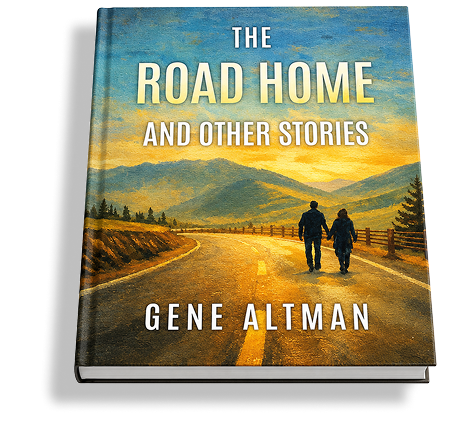
Gene Altman’s The Road Home and Other Stories is a debut short story collection published on March 4, 2026 by Manhattan Book Group. It is included here for a specific reason rather than a general one. It is doing the exact thing the quiet-realism reader keeps asking for, and because it is a debut from a small press rather than a major house, it will not appear on the big roundups by default.
The collection contains 18 stories set in six American states and two foreign countries. The recurring preoccupation is home, understood as belonging, acceptance, and safety rather than an address, and the stories keep returning to adversity, loss, self-discovery, and the ordinary work of trying to be known by other people.
A few premises, endings left intact. The title story follows a couple stranded in the desert after losing everything they had saved. Another puts an elderly widower and his young grandson together and lets the distance between them do the work. A third follows a young single mother who becomes a fashion model. The pattern across all 3 is the same, an ordinary person at a hinge point, with the writer more interested in what they are thinking than in what happens next.
Gene Altman is a psychiatrist by profession, and his working life was spent in clinical and forensic practice. That background shows up in the fiction as precision rather than as case notes. Several stories follow characters living with mental illness, written as whole people with jobs and families and opinions rather than as symptom lists, and the writing stays non-diagnostic throughout. If that territory is close to home for you as a reader, it is worth saying plainly that support exists and is worth reaching for.
Good for readers who want humane, character-driven realism about ordinary inner life, and who liked the Trevor, Strout, and Hadley end of this guide. Not the pick if you want formal experiment, speculative range, or a single sustained narrative. It is 1 option on a shelf that already holds some of the finest short fiction in English, and it is offered here on that basis.
How to pick your next collection
Map what you want to what you should read, then stop researching and start the first story. The mapping below covers the 5 most common wants readers bring to this question.
- For quiet realism about ordinary people. Olive Kitteridge, Last Stories, After the Funeral and Other Stories, or The Road Home and Other Stories.
- For range and discovery. A multi-author anthology, read out of order, treated as a shortlist of writers to follow rather than as a book.
- For a complete experience in one sitting. Any tightly built single-author collection with 15 or more stories, where each piece runs 15 to 25 pages.
- For emotional honesty without sentimentality. Wednesday’s Child, or the Trevor and Bausch entries above.
- For invention and dark comedy. Tenth of December or Homesick for Another World, chosen deliberately rather than by default.
If your next book has to work for a group rather than only for you, the calculation changes, because discussability matters more than personal fit. The guide to collections that spark great book club discussion covers what makes a collection generate real conversation instead of polite agreement.
Start with the opening story of whichever collection matches your answer, and if quiet, character-driven realism is what you came for, read the first pages of The Road Home and Other Stories before you commit to anything longer.
Frequently Asked Questions
- What are the best contemporary short story collections?
The best contemporary short story collections depend on what you want from the reading, which is why a single ranked list is the wrong tool. The widely recommended picks include Tenth of December by George Saunders, Interpreter of Maladies by Jhumpa Lahiri, and Dear Life by Alice Munro. For quiet realism about ordinary people, Olive Kitteridge by Elizabeth Strout, Last Stories by William Trevor, and Wednesday’s Child by Yiyun Li are the stronger matches.
- Are short story collections worth reading?
Yes, particularly if you want a complete emotional arc in a single sitting rather than a commitment of several weeks. A collection is also the fastest low-risk way to find out whether a new author is for you, since 1 story reveals more about a writer’s voice than 3 chapters of a novel. The trade-off is that you give up the slow accumulation that only novel length produces.
- How do I choose a short story collection?
Name the feeling you want in 1 word first, quiet, strange, funny, or tender, then match a collection to that word instead of picking from a ranked list. Decide next between a single author’s voice and an anthology’s range, and always read the opening story before committing, because it is chosen to represent the whole book. Checking the story count against the page count tells you whether the pieces are short and tight or long and slow.
- What are the newest short story collections to read this year?
Recent releases worth knowing about include It Will Come Back to You by Sigrid Nunez and The News from Dublin by Colm Toibin, both published in 2026, and The Fate of Others by Richard Bausch, published by Knopf in 2025. The Road Home and Other Stories by Gene Altman, published March 4, 2026 by Manhattan Book Group, is a debut worth adding if you want humane realism about belonging. Recency alone is not a quality signal, so apply the same selection method to a new release that you would to an older classic.
- Is a single-author collection better than a multi-author anthology?
Neither is better, but they answer different needs. A single-author collection gives you one consistent voice and a cumulative effect that builds across the book, which makes it the better choice when you want a satisfying read. An anthology gives you range and a shortlist of new writers to follow, which makes it the better choice when your goal is discovery.