
Most lists of books like Alice Munro hand you a row of names and trust you to guess which one fits. That is an odd way to recommend a writer whose entire gift is specificity. Readers who love Munro are not chasing a genre. They are chasing a particular sensation, the moment a quiet story turns and an ordinary life opens up behind it.
So this guide is built differently. It starts with what Munro actually does on the page, then groups the recommendations into the classic writers who built that tradition and the contemporary writers still working inside it. Every name arrives with the reason it belongs, so you can choose by the quality you loved rather than by reputation or by an algorithm’s guess.
What this guide covers.
- What makes Alice Munro’s stories so loved
- Which authors are most like Alice Munro
- What to read after Dear Life or Runaway
- Why her stories read like compressed novels
- A newer collection in the same tradition
- How to choose your next read by what you loved
What makes Alice Munro’s stories so loved
Alice Munro is loved for 4 qualities that rarely appear together in one writer. She fits a whole life inside a single story, she lets the revelation arrive sideways rather than on cue, she writes ordinary people with unsentimental precision, and she refuses to close with a tidy moral. Naming those qualities first matters, because they are the actual filter for what you should read next.
The compression is the most visible of the 4. A Munro story can open in a farmhouse kitchen, cross 30 years in a paragraph break, and return to that kitchen with everything about it changed. Nothing is summarized away to make room. You get the decades, and you get them at story length.
The sideways revelation is the quality readers find hardest to describe and hardest to give up. Munro rarely announces the turn. She plants a fact early, lets it sit, and then sets one sentence late in the story that reorganizes everything before it. The story does not build to a climax so much as it quietly discloses that it was a different story all along.
The third quality is her refusal to make ordinary people either noble or ridiculous. Her characters are petty and generous inside the same paragraph, and she declines to editorialize about the contradiction. That restraint is why readers trust her.
The fourth is the missing moral. Munro ends where the understanding ends, not where a lesson would be. This is why her endings feel unresolved on a first reading and inevitable on a second, and it is the single hardest thing to find in a replacement writer.
There is a clinical version of the same observation. A psychiatrist spends a working life listening to people describe their own lives, and the striking thing is how little of that description is orderly. People revise their own account mid sentence. They present something settled and then contradict it with one detail they did not mean to hand over. Munro’s refusal to simplify the inner life is not a stylistic preference. It is closer to how people actually think under pressure than the tidier fiction sitting next to her on the shelf.
Which authors are most like Alice Munro
The closest read-alikes for Alice Munro are William Trevor, William Maxwell, Eudora Welty, Andre Dubus, Anne Tyler, and Lorrie Moore. Each one shares a specific Munro quality rather than a general resemblance, and the note beside each name tells you which quality you are getting.
- William Trevor for the compression and the quiet cruelty of small communities.
- William Maxwell for the way one early event keeps rewriting a character’s whole life.
- Eudora Welty for the small town rendered as a complete social world.
- Andre Dubus for the emotional pressure inside ordinary domestic life.
- Anne Tyler for a family tracked across decades, in novel form rather than stories.
- Lorrie Moore for wit riding on top of real grief, and never deflecting it.
That list splits cleanly in 2 directions. Some of these writers belong to the mid century tradition Munro came out of. Others are still publishing, or published recently enough that their books read as contemporary. Both groups are below, because readers searching for authors like Alice Munro usually want one or the other and rarely both at once. Anton Chekhov sits behind all 6 of them and gets his own entry in the classic tier, since he is the origin of the form rather than a read-alike for it.
The classic writers in her tradition
If you want the tradition Munro wrote out of, start with the realist short-story masters who came before her. The line runs from Chekhov through the mid century Irish and American writers, and it holds together on a single conviction, that an ordinary life examined closely enough is sufficient subject matter. Each entry below opens with the reason to read that writer if Munro is what you loved.
Anton Chekhov: Read Chekhov if you want the source of everything else on this list. He established the modern short story’s central move, ending on a shift in understanding rather than on a resolved plot, and every writer here is working inside that inheritance. His stories are shorter and cooler than Munro’s, which makes them the fastest way to see the mechanism working with nothing else in the way.
William Trevor: Read Trevor if what you loved was the compression and the quiet cruelty of small communities. He follows provincial Irish and English lives with the same patience Munro gives rural Ontario, and his stories land the same way, late and sideways, with the real event arriving after you thought the story was over. After Rain is the best single entry point. The Collected Stories is where to go if you want the full range in one volume.
William Maxwell: Read Maxwell if you loved the way an early event in a Munro story keeps rewriting a character’s understanding of their own life. He spent much of his working life as a fiction editor at The New Yorker, and his own prose is the plainest on this list, which is exactly what makes it land. So Long, See You Tomorrow is a short novel rather than a collection and is the best place to start. All the Days and Nights gathers the stories.
Eudora Welty: Read Welty if the pleasure for you was the small town written as a complete social world. Her Mississippi functions the way Munro’s Ontario does, a place where everyone’s history is public property and nobody says the important thing out loud. The Collected Stories of Eudora Welty is the standard gateway. The Golden Apples is the linked cycle for readers who like one place explored across many stories.
Andre Dubus: Read Dubus if you wanted more pressure and more risk inside ordinary domestic life. He writes marriages coming apart, fathers and children, and the Catholic New England he knew, with a seriousness usually reserved for grander subjects, and he never treats a working life as a lesser one. Selected Stories is the place to begin, and Dancing After Hours is the later collection. Note that he is not the same writer as his son, the novelist Andre Dubus III.
The useful thing about this tier is that it is close-knit. Read 2 of these writers and the third becomes easier to read, because they are all solving the same problem, how to give a small life its full weight without inflating it.
Contemporary collections with the same quiet power
Yes, the tradition is still being written. Writers are still producing quiet literary short stories built on close attention to ordinary people rather than on plot, and 2 of the most reliable are below. This is the tier most read-alike lists skip, because algorithmic also-read graphs and library catalog lists both settle naturally on the established mid century names.
Anne Tyler: Read Tyler if what you loved was the slow deformation of a family across decades. She writes novels rather than stories, but she works Munro’s material, ordinary households in one city, examined until the ordinariness turns strange. Dinner at the Homesick Restaurant is the one to read if you want a whole family across a lifetime. Breathing Lessons is the tighter, funnier entry point.
Lorrie Moore: Read Moore if you want Munro’s emotional accuracy with a comic surface over the top of it. Her sentences are quicker and more openly funny, and the jokes are load bearing, holding up something the character cannot say directly. Birds of America is the collection most readers start with. Self-Help is the earlier and more formally playful one.
The honest limitation of this tier is that it is short. Anne Tyler and Lorrie Moore are long-established names, which is precisely why the existing read-alike lists stop where they stop. A machine co-read graph recommends what other Munro buyers already bought, and a library staff list recommends what that library holds, so neither one reaches a newer book. A current collection working the same material is covered further down, and it is the part of this list those sources cannot supply.
What should you read after Dear Life or Runaway
If you have finished Dear Life or Runaway, the next step depends on whether you want more Munro or the writers standing closest to her. Inside her own work, the collections nearest in feel are The Love of a Good Woman and Friend of My Youth. Outside it, the substitution that disappoints least is William Trevor.
Munro’s own on-ramp is worth stating plainly, because it is the other half of this question and most guides answer only one half of it. New readers are usually pointed at Dear Life first, and it works, but it is her final collection and it reads like a late one, spare and unhurried. Readers who want the fuller, more expansive Munro often do better starting somewhere else.
- Start with Runaway if you want the clearest demonstration of the time jump, which is the technique most readers come to Munro for in the first place.
- Start with Dear Life if you want the late, distilled Munro and are happy with a quiet entry into her work.
- Start with Selected Stories if you would rather sample the range across decades before committing to a single book.
- Start with Lives of Girls and Women if you want the linked collection that reads closest to a novel.
- Start with The Love of a Good Woman if you want the long title story that shows how far she will stretch the form.
After Munro herself, the direction you go should follow what you miss most. Readers who miss the technique should go to William Trevor, because he shares both the compression and the endings. Readers who miss the small town social world more than the technique should go to Eudora Welty. Readers who miss a family tracked across a lifetime should go to Anne Tyler and accept novels rather than stories in the exchange. Readers who miss the plain, unshowy sentence should go to William Maxwell.
Why Munro’s short stories read like compressed novels
Munro’s stories read like compressed novels because she crosses decades inside a few pages, releases information late that forces you to re-read what came before, and lets the meaning of a scene change after the scene has ended. Those 3 moves together are the mechanism, and once you can name it you can recognize it in a writer you have never read.
The time handling is the most visible part. A paragraph break in a Munro story is often a jump of 10 or 20 years, made without announcement and without a bridging sentence. She trusts you to absorb it, and the effect is that a story carries a novel’s worth of consequence with none of a novel’s scaffolding.
The delayed information is the harder trick. She will state a fact in the second paragraph that means nothing on a first reading, and only on the last page does it acquire its weight. Nothing was hidden from you. The story simply had not yet told you what to do with what it gave you.
The third element is retroactive meaning. A scene you read as tender turns out to have been the opening of a betrayal, and the scene itself does not change, only your access to it. This is the quality most readers are describing when they say a Munro story stayed with them for weeks.
There is a reason this structure reads as true rather than as clever. Self understanding does not arrive on schedule. People carry a fact about their own lives for years without knowing what it explains, and then one ordinary afternoon it reorganizes everything behind it. Fiction that delivers insight on cue is easier to read and much less recognizable. A clinician hears the delayed version constantly, in consulting rooms and in ordinary conversation, which is why Munro’s structure registers as accurate rather than as technique.
Use this as a diagnostic when you are standing in front of an unfamiliar collection. Read one story and ask 2 questions. Does it move time without warning, and does it withhold. If the answer to both is yes, you are in the right tradition, regardless of the author’s name, nationality, or era.
A newer collection for readers who love this kind of writing
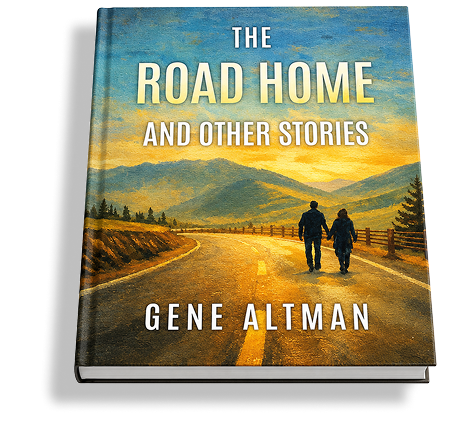
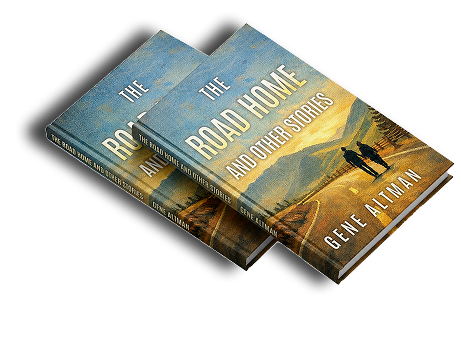
The Road Home and Other Stories is a debut short-fiction collection working in the same humane realist tradition, written by Gene Altman, a practicing psychiatrist who writes short fiction. It is 18 stories set in six American states and two foreign countries, all of them about ordinary people and the search for belonging.
The placement here is deliberate and modest. This is not a claim that a debut collection stands beside a Nobel laureate. It is a straightforward suggestion for the specific reader this article is written for, someone who has worked through the classic tier, found the contemporary tier thin, and wants a current book that works the same material rather than a different genre wearing literary clothes.
What the collection shares with the writers above is both subject and method. The stories stay with ordinary people at the moment their lives turn, and the turns are internal rather than dramatic. Grief, longing, and self discovery run through the whole book, and the framing theme across all 18 stories is home understood as belonging, acceptance, and safety rather than as a place on a map. That is the same territory Munro works whenever she writes about someone who left a small town and still cannot say what they lost.
The differentiator is the lens. Gene Altman is a practicing psychiatrist, and the collection portrays mental illness with clinical accuracy and without sensation. That lens is the clearest reason a Munro reader might find the book worth their time, because the inner life is rendered the way a clinician has heard it described rather than the way fiction usually stages it.
A few premises give you the flavor without spoiling anything. The title story follows a couple stranded in the Arizona desert after losing everything they had saved. Another follows an elderly widower and his young grandson. Another follows a young single mother who becomes a fashion model. Another follows a young man resisting a voice that commands him to kill his abusive stepfather, and that story is where the clinical accuracy is most visible and most restrained.
The endings stay protected here on purpose. A collection like this depends on the same delayed turn Munro uses, and knowing where a story lands removes most of the reason to read it.
How to choose your next read by what you loved in Munro
The fastest way to choose is to name the one thing you would miss most if it were taken away. Each row below maps a specific Munro pleasure to the writer who gives you the most of it, so you can stop reading this list and start reading a book.
| What you loved most in Munro | Where to go next |
| Decades crossed inside a few pages | William Maxwell |
| The quietly devastating ending | William Trevor |
| The small town as a complete social world | Eudora Welty |
| Ordinary domestic pressure and marriages under strain | Andre Dubus |
| A family tracked across a lifetime | Anne Tyler |
| The unsentimental look at the inner life | Anton Chekhov |
| Humor carrying the grief instead of deflecting it | Lorrie Moore |
| A present-day collection in the same tradition | The Road Home and Other Stories |
There are 2 notes on using that table. First, it maps qualities, not rankings, so a row further down is not a lesser book. Second, if more than 1 row describes you, begin in the classic tier, because those are the writers the others are answering.
The point of a list of books like Alice Munro is never the names. It is the reason each name is on it. A recommendation you cannot explain is a recommendation you cannot act on, which is why the bare author lists and the co-purchase graphs leave most Munro readers exactly where they started.
If what you want is the wider category rather than the Munro specific line, the guide to quiet, character-driven fiction for thoughtful readers covers the same ground across more writers and takes in novels alongside quiet literary short stories.
Pick the single quality you would miss most, then start with the writer beside it. If you want a present-day collection working in the same humane realist tradition, take a look at The Road Home and Other Stories.
Frequently Asked Questions
Which authors are most like Alice Munro?
The closest read-alikes are William Trevor, William Maxwell, Eudora Welty, Andre Dubus, Anne Tyler, and Lorrie Moore. Trevor is the nearest match for compression and endings, Welty for the small town rendered as a full social world, and Tyler for families tracked across decades. Anton Chekhov sits behind all of them as the origin of the form rather than as a read-alike for it.
What makes Alice Munro’s short stories so special?
Munro fits a whole life inside a single story, withholds the revelation until it arrives sideways, and ends where the understanding ends rather than where a moral would be. The result is that one story carries a novel’s worth of consequence without a novel’s length. She won the Nobel Prize in Literature, and what most readers point to is her emotional precision about ordinary people.
What should I read after Alice Munro’s Dear Life?
Stay inside Munro’s own work first and read The Love of a Good Woman or Friend of My Youth, both of which are fuller and more expansive than the late, spare Dear Life. When you are ready to leave her work, William Trevor is the substitution that disappoints least, because he shares both her compression and her endings.
Are there contemporary short story writers in Alice Munro’s tradition?
Yes. Lorrie Moore writes the same emotional accuracy with a comic surface over it, and Anne Tyler works Munro’s material in novel form, tracking ordinary families across decades. Newer books continue the tradition as well, including The Road Home and Other Stories, a debut collection of 18 stories about ordinary people and the search for belonging.
Where should a new reader start with Alice Munro herself?
Start with Runaway if you want the clearest demonstration of the time jump Munro is known for, or with Selected Stories if you would rather sample her range across decades before committing to one book. Dear Life is the common recommendation and it does work, but it is her final collection and reads like a late one, so it is a quieter entry than most new readers expect.