
Quick answer: Short story collections are excellent for book clubs because each story delivers a complete experience in one sitting, so everyone can join the discussion even during a busy week and even if they did not finish the whole book. The most discussable collections pair believable, psychologically real characters with genuine moral gray areas, which give a group the most to argue about. To run the meeting well, pick two or three stories, discuss each story’s characters and choices on its own, then compare them across the collection.
Short story collections for book clubs have quietly become one of the most dependable picks a host can bring to the group. A novel asks every member to clear the same large block of time, and the meeting can stall when half the room did not finish. A collection removes that pressure, because a single finished story is enough to give a reader something real to say. This guide covers why the format works so well, what makes one collection far more discussable than another, exactly how to run the meeting from the first reaction to the final comparison, and a bank of open questions you can reuse for any book you choose next.
Here is the path this guide follows, from why the format works to a set of questions you can print and reuse.
- Why short stories suit a book club
- What makes a collection genuinely worth discussing
- A simple, ordered method for running the meeting
- How to include members who did not finish
- The kinds of collections that start real conversations
- A reusable bank of discussion questions for any collection
Are short stories a good choice for a book club?
Yes, short stories are one of the strongest choices a book club can make, and the format hands you two structural advantages for free. First, each story is a complete experience you can read in a single sitting, so a member with a punishing week can still arrive having genuinely finished something and formed a view. Second, the discussion does not fall apart when someone read only part of the book, because one story is a whole unit of conversation on its own.
Compare that with a novel, where the commitment is all or nothing. A member who reaches only chapter nine of a twenty-chapter book often stays quiet, wary of spoilers or of talking over a plot they have not seen resolved. Book club short stories reverse that dynamic entirely. Everyone who read the agreed story arrives on equal footing, and the reader who went further has more to offer rather than something to hide.
The format is also kind to the people a group most wants to keep. New members who are still nervous, busy parents, shift workers, and anyone with an unpredictable month can all take part on any given night, because the price of entry is one short story rather than three hundred pages. Over a year, that flexibility is often what keeps a club together, and it is the quiet reason a collection can deliver a fuller room than a celebrated novel.
A collection carries a second, subtler advantage a single novel cannot match. Because each story stands alone, one book can move a group through several tones, settings, and narrators in a single evening, which keeps the discussion varied and gives quieter readers more than one point of entry. A member who found little to say about the opening story often has a great deal to say about the third, and the conversation gains rather than loses when tastes in the room differ.
What makes a short story collection worth discussing?
A collection is worth discussing when its stories give the group something to argue about, not merely something to admire. The best short stories for book clubs share a small set of qualities that reliably generate conversation, and a host can screen almost any collection against them in a few minutes at the shelf or the library catalogue.
- Believable characters who change under pressure, so the group can debate why a person acted as they did.
- Real moral gray areas rather than tidy morals, so no single correct reading arrives to shut the talk down.
- Ambiguous or open endings that leave a decision or a meaning for readers to finish for themselves.
- Thematic threads that recur across stories, so the collection rewards reading one story against another.
That last quality, psychological realism, is where a collection quietly earns its evening. Characters who are merely eventful give a group a plot to recap and little else. Characters who are psychologically real, whose fear or pride or grief drives a choice you can almost defend, give a group something to keep turning over long after the meeting ends. This is a lens that the psychiatrist behind these stories brings to the page, and it is worth borrowing when you choose a book, because the deepest discussions tend to gather around people rather than around events.
Why moral gray areas beat tidy endings for group talk
Moral gray areas beat tidy endings because a resolved story ends the conversation while an unresolved one starts it. When a writer hands the group a clean verdict, everyone nods and moves on to the next point. When a writer leaves a genuine dilemma open, the room has to supply the missing judgment itself, and that act of supplying it is where real discussion begins.
The most productive dilemmas are the ones where you cannot fully condemn or forgive a character. Picture a person choosing between two loyalties that cannot both be honored, or an act that reads as cruelty from one seat and mercy from another. No two readers weigh those the same way, so the disagreement in the room is honest rather than manufactured. Ambiguity, handled with care rather than confusion, is the single most dependable engine of book club debate.
How do you run a book club discussion on a short story collection?
To run a book club discussion on a short story collection, decide the reading plan first, open with quick reactions, discuss each chosen story on its own, and then compare across the collection before you close. The ordered method below keeps a group from drifting and gives quieter members a clear place to speak.
Treat the steps as a loose script rather than a rulebook. The aim is to move from individual stories to the shape of the whole book, so the evening builds toward something instead of scattering into unrelated tangents.
- Decide up front whether the group reads the entire collection or a selection, and name the anchor stories for this meeting so no one is guessing what to prepare.
- Open with a fast lap around the room, one honest first reaction from each member, before anyone launches into full analysis.
- Take the anchor stories one at a time, and for each one discuss the characters, the choices they make, and the theme underneath before moving to the next.
- Compare the stories against each other once each has had its turn, looking for the threads, echoes, and contradictions that run across the book.
- Set one light ground rule, that everyone speaks at least once, so the most confident reader does not quietly set the entire agenda.
One practical refinement keeps a longer meeting on track. Give each anchor story a rough time budget, perhaps fifteen or twenty minutes, and let the story champion signal when the group should move on. The budget is less a stopwatch than a promise that every chosen story gets its fair share of the room before the evening runs out, which stops the first story from swallowing all the time and leaving the others unread aloud.
Should the group read the whole collection or just a few stories?
Either approach works, and the right one depends on how much time your group realistically has this month. Reading the whole collection rewards you with the full arc and every thematic echo, but it asks for novel-sized commitment and can lose the members who fell behind. Reading a selection of two or three stories keeps the bar low and the discussion tightly focused, at the cost of the wider picture.
A practical middle path is to assign a small set of anchor stories everyone commits to, then invite anyone who read further to bring the extra stories into the comparison stage. The meeting keeps a guaranteed shared core, and the deeper readers still have room to add what they found.
How do you pace a collection across several meetings?
To pace a collection across several meetings, cluster the stories by theme rather than reading them in printed order, and give each session a clear center of gravity. A steady rhythm keeps momentum without turning the book into a chore.
- Group the stories by a shared theme or setting for each session, so every meeting has its own through-line instead of a random slice of the table of contents.
- Assign a story champion each time, one member who rereads the chosen story closely and arrives with two or three questions ready to open the talk.
- Save the final meeting to step back and compare the whole arc, since a collection often reveals its design only once the group can see all the stories together.
How do you include members who did not finish the collection?
Include members who did not finish by anchoring the discussion on one or two stories everyone was asked to read, because the format is forgiving in a way novels never are. A single finished story is a complete contribution, so a partial reader is never actually locked out of the conversation.
Ask the group to treat the anchor stories as the shared floor, and invite anyone who read only those to react to them fully rather than apologize for the stories they missed. The story champion role helps here as well, since it means no single member needs to have read everything for the meeting to work. A host who says out loud that finishing one story is enough will draw out more voices than a host who quietly assumes the whole book got read.
Quieter members often need only a small, specific opening, a question aimed at one moment in one story rather than at the book as a whole. Offer that, and the collection does the rest, because it is far easier to speak about a single character you actually met than about a book you only partly finished. Handled this way, the members who ran out of time still leave the meeting having genuinely taken part. It also changes the tone of the room for the better, because a meeting that welcomes partial readers feels less like an exam and more like a real conversation, and that is usually the thing that brings people back the following month.
Which qualities make a collection start real conversations?
The short story collections for book clubs that start real conversations tend to fall into a few recognizable kinds, all of which put people and their contradictions at the center. Rather than a ranking, treat this as a shortlist of shapes worth looking for on the shelf.
Psychologically rich character studies come first, the collections that follow ordinary people through pressure and change. The realist short-story tradition is full of them, from Anton Chekhov and Alice Munro to William Trevor, Andre Dubus, Tobias Wolff, Eudora Welty, and William Maxwell. Their stories reward a group precisely because the drama lives inside the characters, where readers can reasonably disagree about motive and meaning.
Linked collections are a second reliable kind, where a running theme, a shared place, or a recurring set of concerns ties the stories together. They give a book club the pleasure of comparison, since each story quietly comments on the ones around it. A third kind sits deliberately in moral gray areas and refuses the tidy ending, which, as any host learns after a few meetings, is where the longest and most honest discussions grow.
Finding these collections is easier than it looks. Independent presses, literary magazines, and prize anthologies publish new short fiction every year, and most libraries shelve the modern realists alongside the classics, so a host on a budget can assemble a strong season of reading without buying a single new hardcover. When you are choosing, favor a book whose stories argue with one another over one whose stories simply sit side by side, because the friction between them is what a group ends up talking about.
If you are building a reading list along these lines, two companion guides go deeper. One rounds up contemporary collections worth your time, and another looks at short stories that get family right, a theme that almost never fails to fill a room with strong opinions.
A collection built for the kind of talk a book club wants
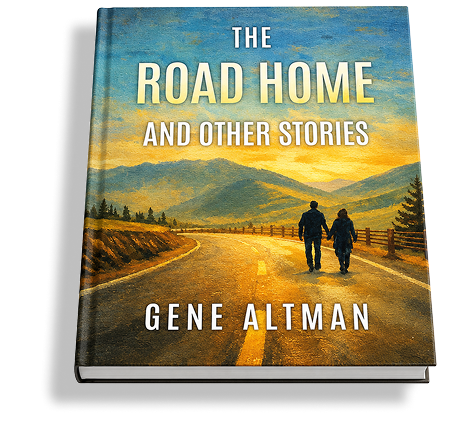
One recent collection built squarely for this kind of talk is The Road Home and Other Stories, the fiction collection from Gene Altman, a practicing psychiatrist, and it is shaped around characters under real psychological pressure. Its 18 stories were written to sit in the gray areas a book club thrives on, which is what makes the book a natural first pick for a discussion-driven meeting.
The collection gathers 18 stories set in six American states and two foreign countries, and it returns again and again to a single question, what home really means once you understand it as belonging and acceptance rather than a place on a map. That theme hands a group an easy spine for the evening, because almost everyone arrives with a private answer to it. The characters are drawn with a clinician’s attention to how people actually think and feel under strain, so the talk tends to gather around motive and meaning rather than plot summary.
Measured against the checklist earlier in this guide, the collection scores where it counts. The people change under pressure, the endings frequently leave a judgment for the reader to make, and the theme of belonging runs across the whole book so the stories speak to one another. Those are the same qualities that make any collection worth an evening of conversation, gathered here in a single volume rather than assembled by the host from scratch.
Several of these stories touch on mental illness, and they do so with care rather than spectacle, so a group can discuss them honestly while remembering that support exists for anyone the subject touches closely.
Reusable discussion questions that work for any short story collection
The questions below work for almost any short story collection, and you can bring them to a meeting cold on a night you had no time to prepare your own. Each one is open rather than yes-or-no, and none of them requires anyone to have finished the whole book. Keep them on hand as a portable kit for any short story discussion.
- Which story stayed with you after you closed the book, and what do you think made it stick?
- Which character felt the most real to you, and where exactly did that come through on the page?
- Where did the writer leave something unresolved on purpose, and how did you fill the gap yourself?
- Which two stories seem to speak to each other, and what do they say when you read them side by side?
- Whose choice could you not fully judge, and what made a verdict so hard to reach?
- How does the collection’s title frame the whole book once you have finished it?
- Which story would you hand to a friend, and which friend would you give it to?
- What theme kept returning across the stories, and did the writer ever complicate or challenge it?
- Which ending changed the way you read everything that came before it?
- If the writer could add one more story to the collection, what do you wish it would be about?
Turn one good collection into your best meeting yet
The method is short enough to keep in your head. Pick a collection with real characters and honest gray areas, choose two or three anchor stories, discuss each one on its own, then compare them across the book, and keep a few open questions ready so every member has a way in. Do that, and a slim book of stories can carry a fuller conversation than many celebrated novels.
If you want a first pick that reads as though it were made for this kind of evening, start with a collection built around characters under pressure and the question of what home really means, then let the two companion guides above line up your next few months of reading. Chosen well, a slim collection can spark the kind of talk that makes short story collections for book clubs such a dependable choice.
Discover The Road Home and Other Stories as a first pick for your next discussion-driven meeting
Frequently Asked Questions
- Are short stories good for book clubs?
Yes, short stories are an excellent fit for book clubs. Each story is a complete experience you can read in one sitting, so members can contribute even during a busy week, and the discussion still works when someone has read only part of the collection.
- How do you run a book club on a short story collection?
Choose two or three anchor stories, open the meeting with a quick first reaction from each member, then discuss each story on its own before comparing them across the collection. Setting one light ground rule that everyone speaks keeps the conversation balanced.
- What makes a short story collection good for discussion?
The most discussable collections pair believable characters who change under pressure with real moral gray areas and open endings. Recurring themes across the stories help too, because they give the group something to compare from one story to the next.
- Should a book club read the whole collection or just a few stories?
Both approaches work, and the choice depends on your group’s time. Reading everything gives you the full arc, while reading two or three chosen stories keeps the bar low and the discussion focused, and a shared set of anchor stories is a sound compromise.
- How can members join the discussion if they did not finish the book?
Anchor the meeting on one or two stories everyone agreed to read, since a single finished story is a complete contribution. Inviting partial readers to react to those anchor stories, and using a story champion for each one, means no member has to have read the whole book to take part.