
Quick answer: In literature, home almost never means only a house. It means belonging, safety, and a settled sense of self, and most stories about home are really about the distance between the place a character comes from and the feeling they are still looking for. That gap between a location and a feeling of belonging is what gives the search for home its emotional weight, and it is why so much fiction keeps returning to it.
Ask a room full of readers what home means and you will get answers that have almost nothing to do with architecture. Someone named a grandmother’s kitchen. Someone names a language, or a smell, or a person who is no longer alive. The meaning of home in literature works the same way, because writers reach for home whenever they want to talk about belonging without saying the word out loud.
This essay looks at why home carries so much weight on the page, how it works as both a place and a feeling, why the search for it drives so many stories, and why we sometimes feel we can never truly return. It is written from a double vantage point, that of a lifelong reader and that of a clinician who spent a long career listening to people describe where they felt they belonged and where they did not.
– What home symbolizes in literature
– Why home is such a common theme in fiction
– Whether home is a place or a feeling
– The journey of leaving and returning
– The psychology of belonging
– Why we feel we can never go home again
– Why short stories suit the search for home
– What the road home means as a theme
What does home actually symbolize in literature
In literature, home usually symbolizes belonging, identity, safety, and memory far more than it stands for a physical building. When a writer sends a character back to a childhood house, the house itself is rarely the point. It is a way to make an inner state visible, something the reader can see on the page while the real subject stays felt rather than spelled out.
The theme of home in fiction tends to gather a familiar cluster of meanings around it. Home is comfort, but it is also conflict, because the people who know us best are often the ones who can wound us most precisely. It is roots and nostalgia, the steady pull of where we began. And it is frequently the end of a journey, the thing a character has been moving toward across the whole arc of a story, even when they could not have named it at the start.
Answering what does home symbolize in literature therefore means holding several layers at once. A single kitchen table can carry safety, obligation, grief, and love in the same short scene. A doorway can stand for both welcome and exile depending on which way a character is walking through it. That density is exactly why writers keep choosing home over a plainer image, because one ordinary setting can hold a lifetime of contradictory feeling without a single line of explanation.
Home also symbolizes the self a character began as, which is one reason so many stories use a return trip to measure how far someone has actually traveled. A stretch of faded wallpaper or a familiar street can register years of change in a single glance. In that sense home works less like a backdrop and more like a mirror, showing a character who they once were set against who they have since become, and letting the reader feel the whole distance without a word of commentary.
Why is home such a common theme in fiction
Home is such a common theme in fiction because the longing to belong is close to universal, so a search for home gives almost any story immediate stakes. A reader does not need the feeling explained to them. Everyone carries some version of it, which means a writer can begin from shared ground and move straight to the specific character in front of us.
This is part of what makes home so efficient on the page. Some themes have to be constructed before they can carry weight, but home arrives already loaded. The moment a character wants to get home, or dreads going back, or slowly realizes there is nowhere left to return to, the reader understands the stakes without a paragraph of setup. That instant recognition is rare, and writers know it.
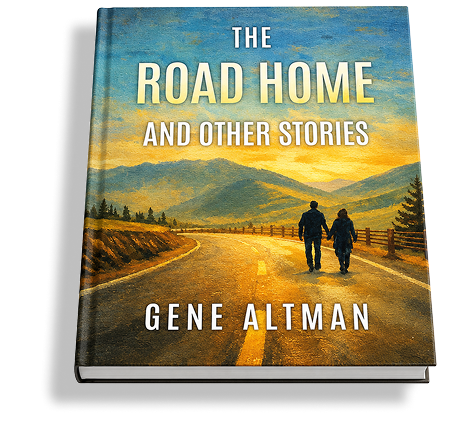
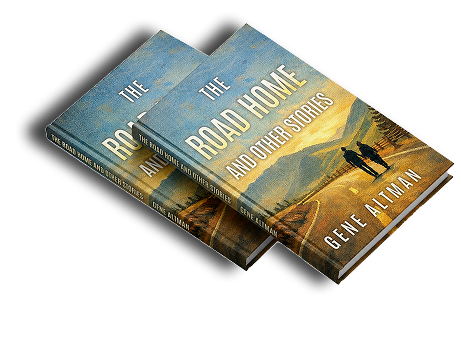
The collection The Road Home and Other Stories is built on this idea from its opening framing, which describes the search for home as a search for belonging, acceptance, understanding, and safety rather than for a physical place. That framing names something most readers already sense, that the word home points at a feeling first and an address second. When fiction treats home that way, it draws on a need almost every reader is carrying before they open the book.
Home also gives a writer a natural way into the larger subjects that surround it. Family, class, migration, memory, and duty all pass through the front door of a home, so a story about whether someone belongs there can quietly widen into a story about all of them at once. That reach is another reason the theme keeps recurring across so many kinds of writing. A story is rarely only about home, even when home is the only thing visible on the surface.
Is home a place or a feeling
Home is both a place and a feeling, and the most affecting stories live in the space between the two. On one side sits a house you can point to, a town, a set of rooms with a particular light. On the other sits a feeling of being at ease in the world, of being known and accepted for who you actually are. A story becomes interesting the moment those two things come apart.
This tension is the spine of most home narratives. The place and the feeling are supposed to line up, and for a fortunate character they do. But fiction is drawn to the gap, to the person who has the address without the belonging or the belonging without any address at all. Because place and feeling are so tightly bound together in how we imagine home, prying them apart creates a tension the reader feels almost physically. Holding the two ideas together as one, rather than treating them as separate subjects, is what gives the theme its long reach. A writer can move a character clear across the world and still be asking the same quiet question, whether any of it feels like home yet.
When a house is not a home
A house is not a home whenever it offers shelter without the feeling of belonging. This is one of the most ordinary paradoxes there is, and fiction returns to it constantly because so many readers have lived inside it. People can own a warm, comfortable house and still move through it like guests in their own lives.
In years of listening to people describe their lives, the sentence I do not feel at home here surfaced about relationships and workplaces far more often than it ever came up about buildings. Fiction captures that same truth without needing a diagnosis. A character can stand in a well-kept room, surrounded by everything a home is supposed to contain, and feel entirely outside it, and the reader understands the ache at once.
What the journey of leaving and returning home really means
The journey of leaving and returning home usually means that leaving is how a character discovers what home actually was. Distance does the revealing. Only after a character goes can the reader, and often the character too, see clearly what was left behind and what it was worth.
This leaving and returning arc is one of the oldest engines in all of storytelling, running from the Odyssey through a great deal of modern fiction. Scholars of narrative describe a recurring shape often called the hero’s journey, or monomyth, a movement of departure, ordeal, coming of age, and eventual return. Home sits at both ends of that pattern, as the place that is departed and the place that is quietly transformed by the act of coming back to it. The character who returns is never the one who left.
Readers who feel this pull can follow it further in a companion essay on why we keep returning to the idea of home [CONFIRM: final slug for the homecoming sibling post, site is in build]. The title of the collection The Road Home and Other Stories names this same arc, with the road standing for the journey back toward belonging rather than for any fixed destination at the end of it.
The psychology of belonging beneath the idea of home
Beneath the idea of home sits a basic human need to belong, which stands alongside safety and identity as one of the deepest things people go looking for. Home is simply the word we give to the place, real or imagined, where those needs are met. That is why the absence of home reads instantly as tension on the page, even when a story never explains what is missing.
Psychologists have long placed belonging near the base of what people need, not far above food and shelter and well below anything that could be called a luxury. belonging in literature draws directly on that reality. When a character has nowhere they are truly known and accepted, a reader senses the lack the way they would sense hunger or cold, whether or not the writer ever puts a name to it. The feeling does the work that exposition cannot.
None of this requires a story to announce its psychology out loud. The most convincing fiction lets the need for belonging show through behavior, through the small ways a character reaches for connection or flinches away from it. A reader recognizes the pattern because they have lived some version of it, and that quiet recognition is usually more persuasive than any explanation a narrator could offer directly.
This is where fiction and clinical experience meet most closely. As a practicing clinician who spent his career listening to people search for belonging, I have watched how much of a person’s inner weather turns on whether they feel they belong somewhere and to someone. Stories that get home right are, underneath, getting that psychology right, which is part of why they land so hard and stay with us so long after the last page.
Why we sometimes feel we can never go home again
We sometimes feel we can never go home again because home is partly a moment in time, so returning to the place can feel like arriving somewhere that no longer exists. The building may still be standing, but the people, the routines, and the version of ourselves that once belonged there have all moved on without waiting.
Fiction is unusually good at this particular ache. A character comes back expecting the old warmth and finds the rooms smaller than memory promised, the family rearranged, the town reshaped around an absence. The place kept its name but lost its meaning, and now the character has to grieve something that is, technically, still right there in front of them.
This is where the theme touches grief and loss directly, and where it earns its emotional weight honestly rather than cheaply. Much of the most lasting fiction about home is really fiction about time, about the way we each carry a place we can revisit but never fully return to. Handled with care, that recognition is not bleak. It becomes one of the ways literature helps us sit with change we did not choose and cannot undo.
Why short stories are so well suited to the search for home
Short stories are especially well suited to the search for home because a single story can hold one charged moment of arriving, leaving, or longing without needing a whole life to explain it. The form thrives on compression, and home is a theme that rewards being caught in a single frame rather than mapped across hundreds of pages.
A novel can trace a character’s entire history with a place, brick by brick. A short story does something different and, for this theme, often sharper. It catches a person at the exact instant the meaning of home shifts under them, a homecoming that quietly goes wrong, a departure that cannot be walked back, an unremarkable evening when someone realizes they are finally at ease. The reader supplies the surrounding life, which makes the single moment feel far larger than the space it occupies.
This is also why the form fits readers who prefer quiet, character-driven fiction over plot machinery and noise. For more on that same pull, a companion piece looks at where fiction finds a sense of belonging [CONFIRM: final slug for the belonging sibling post, site is in build]. A collection of 18 short stories can circle the search for home from 18 different angles, each one complete and self-contained, and together they map the theme more fully than any single long narrative could.
What the road home means as a theme
As a theme, the road home names the journey back toward belonging, whether that means moving toward a place, toward a person, or toward a truer version of oneself. The emphasis falls on the road, the process of returning, rather than on any single arrival. That focus on the movement is what makes it a theme and not merely a plot point at the end of a book.
Read this way, almost every story about home is a road-home story. The character is somewhere, something essential is missing, and the whole motion of the piece is a slow turn toward a belonging they can finally feel. Sometimes they reach it. Sometimes they learn that the place they were chasing was never a place at all, but a person or a season of life that will not come again.
The phrase also captures why the theme can feel hopeful even when a story ends in loss. A road implies motion, and motion implies the possibility of reaching somewhere better than where you started out. Even a character who never quite arrives is still, by the logic of the theme, on the way, and that forward tilt is part of what makes these stories bearable and even quietly sustaining to read.
This is the idea at the heart of The Road Home and Other Stories, a collection whose title names this exact search. The stories do not promise that everyone arrives safely, and they are honest about the ones who do not. What they pay attention to is the road itself, and to what people manage to carry with them along the way.
A soft close and where to read next
If there is one thing worth carrying away from all of this, it is that home in fiction is almost never about real estate. It is about belonging, and about the distance between where we happen to be and the place where we feel we are known. That is why the theme never wears thin, and why readers keep returning to it across centuries and continents and forms.
These stories often move through grief, loss, and the quieter struggles of the mind, and reading them can stir feelings that are close to home in the most literal sense. If any of that sits heavily with you, please know that support is available, and that reaching out to someone you trust, or to a professional, is always a reasonable and human step to take.
Read The Road Home and Other Stories, a collection whose title names this exact search for belonging. You are also welcome to join the reader list for quiet updates when new stories and essays go up, a low-key way to follow the work with no pressure to buy anything. Written by Gene Altman, a psychiatrist who spent his career listening to people search for a place to belong, and who now writes the fiction that grew out of all that listening.
Frequently Asked Questions
- What does home symbolize in literature?
Home most often symbolizes belonging, identity, safety, and memory rather than a physical building. Writers use a house or a hometown as a visible stand-in for an inner sense of being known and accepted, which is why the same setting can hold comfort and conflict in a single scene.
- Why is home such a common theme in fiction?
Home is common because the need to belong is close to universal, so a search for home gives a story instant stakes that need no explanation. Readers arrive already understanding the longing, which lets a writer skip the setup and move straight to the specific character and moment.
- Is home a place or a feeling in a story?
In most stories home is both, and the tension comes from the gap between them. A character may have the house without the sense of belonging, or feel at home somewhere they have no claim to, and that gap is usually where the real drama of the story lives.
- What does the road home mean as a theme?
The road home names the journey back toward belonging, toward a place, a person, or a truer self, with the emphasis on the return rather than the arrival. Read this way, many stories about home are really about the road itself, and about what a character carries along it.
- Why are short stories good at exploring belonging and home?
Short stories suit the theme because they can hold one charged moment of arriving, leaving, or longing without narrating a whole life. That compression lets a single scene carry the full weight of belonging, and a collection can approach the search for home from many angles at once.